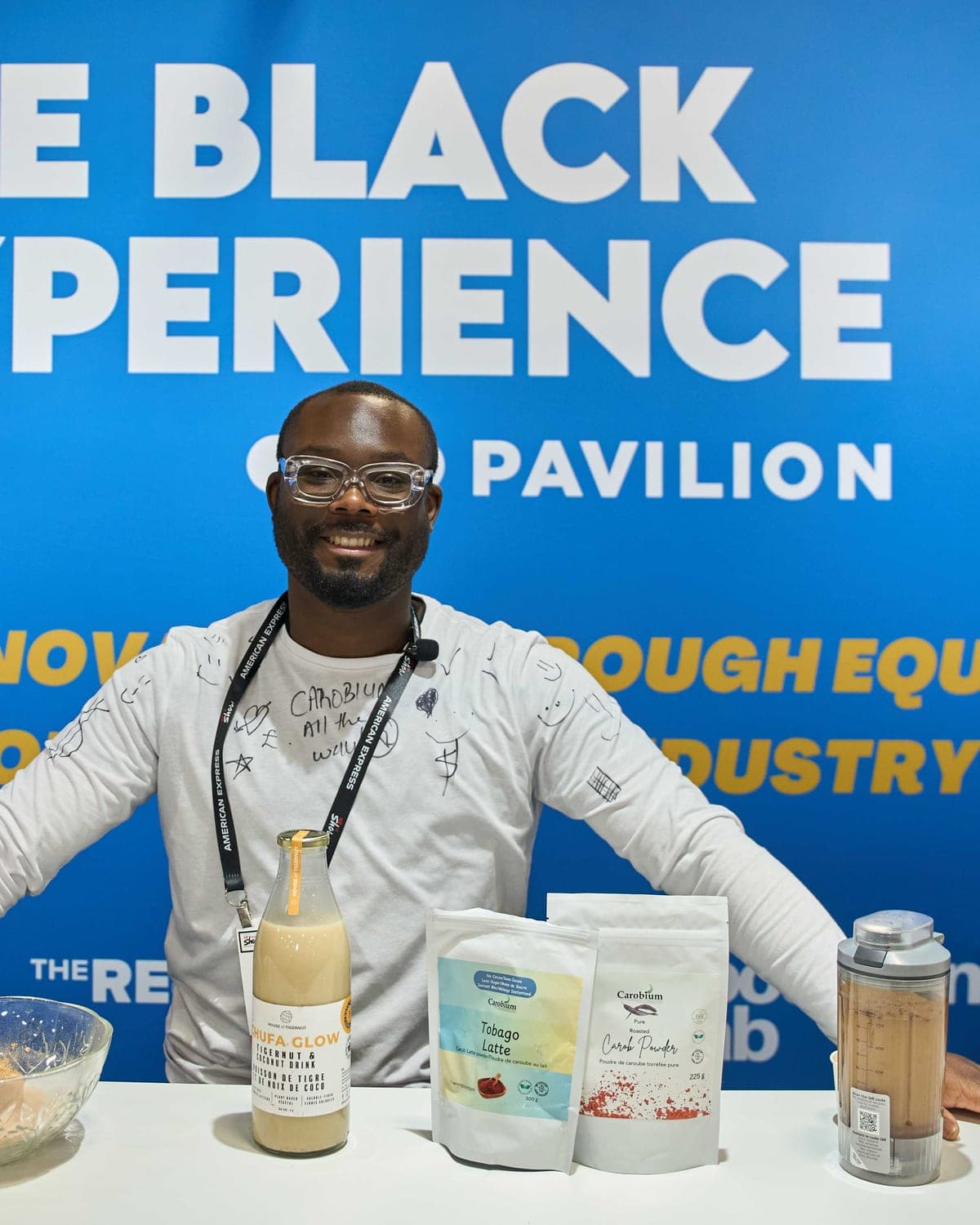
Our storyBefore Carobium, I fell in love with the smell of carob.
Carob came into my life before Carobium did. I first heard about it through a church YouTube video about healthier alternatives to chocolate. What made me want to try it was the recipe they made, a banana carob nice cream, a dairy-free ice cream I could make with my little sister during the pandemic.
So I bought a pack of carob powder. When I finally opened it, the aroma hit me right away, a natural sweetness with notes of caramel, cocoa, and molasses. The nice cream was delicious, but what really stayed with me was the carob itself.
After that, I started making my own version of the Caribbean cocoa tea my grandmother made for me on the stove, swapping the cocoa for carob. That became my way of going deeper: tasting it, testing it, and learning what it could do.
Then carob became more personal.
Food has always been close to me. My mother went to culinary school, my father cooked on cruise ships, and my grandfather cooked for most of his life. In my family, food was never just something you ate. It was one of the ways people showed up for each other.
In 2023, my aunt was battling cancer in Trinidad and Tobago. Before my mother left to visit her, she handed me a commercial hot chocolate powder to pack. I read the label: 36 grams of sugar in a 48 gram serving, and a long list of ingredients. I knew I did not want to send that and call it comfort.
So I thought about the carob tea I was already making, and wondered if I could turn that stovetop drink into a powdered version. Something warm, familiar, and easy to make. I wasn’t only trying to make a hot chocolate substitute. I was trying to make something I would actually feel good sending to someone I loved.
I blended my first version with her in mind and spent months testing and tweaking it so I could be sure she would like it. Somewhere along the way, I realised there are more people like me and my aunt who want better comfort food and drinks. That became the Tobago Latte.
Simple by design.
The earliest versions had the spices I naturally reached for, cinnamon and nutmeg. Over time, I made the call to keep the base simpler. Part of it was consistency, so every batch tastes reliable. Part of it was realising that everyone has their own idea of the perfect cup. Some people love more cinnamon, some want nutmeg, some want none at all. So I kept the foundation simple, not as a shortcut, but so you can make the final cup your own.
Why Tobago?
The name is personal. I grew up on the island of Trinidad, but Tobago is where my mind goes when I think about warmth, calm, and people who make you feel taken care of. Peaceful nights, generous people, the kind of comfort that stays with you. That is the feeling I wanted to put into a cup.
Why Carobium?
Carobium exists to give carob the place I believe it deserves, in modern kitchens, cafés, and everyday rituals. The name carries my love for carob and my Caribbean roots. It is about taking an ancient ingredient and helping people experience it in a way that feels familiar, comforting, and new.
Carobium started with one cup for someone I loved. Today it exists for anyone looking for a simpler, warmer way to enjoy comfort again. Whether you whisk it into a latte, bake with it, blend it into a smoothie, or make it part of your own quiet routine, carob is an invitation to rediscover something old in a new way.
A cup that feels familiar.
A flavour worth discovering.
A ritual you can make your own.